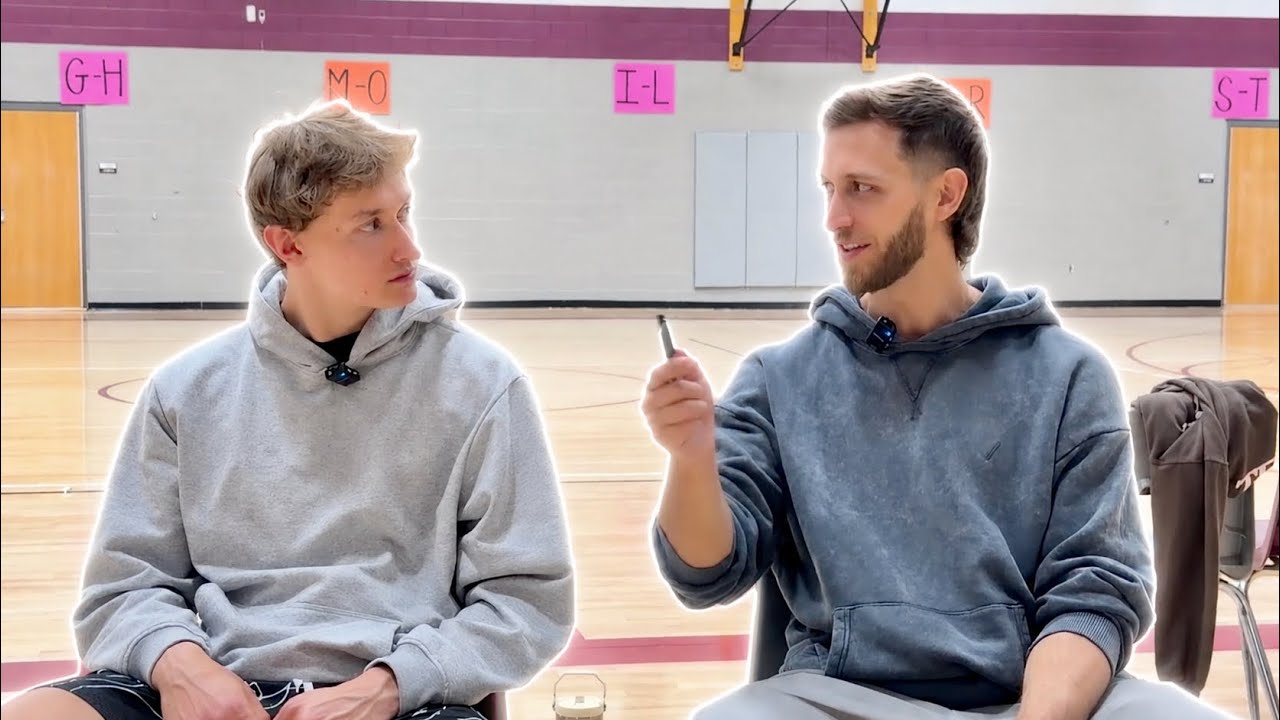
Praise is the cheapest thing at a dunk camp. Everybody in the gym is good, everybody is filming, and by Wednesday you have been told you are crazy about forty times. None of it is worth anything a month later.
What Jordan Kilganon gave 18-year-old Piotr Zawiślak at The Dunk Camp was a different item. He did open with praise, and the praise was strong. Then he spent the rest of the interview laying out a three-part structure for how a dunking career goes wrong, in order, with the fix for each part. That is not a compliment. That is a framework for the next ten years, delivered by the person best qualified to describe them.
Part One: Do Not Let It Become Normal
Kilganon started with the assessment so the advice would land, and the assessment was blunt.
“He’s 18 and he’s doing dunks that took me forever to make, so I’m excited to see what he’s got in the future.”
Jordan Kilganon
Then he flipped immediately to the risk. He said the only thing Piotr has to focus on is being consistent with his focus and appreciating what he has got. Then he acted out the version of Piotr that would waste it: travelling constantly, hitting crazy dunks, sitting near the top of the sport, and treating all of it as the ordinary background of a normal life.
“No. You can’t have that kind of attitude.”
Jordan Kilganon
“You need to appreciate every moment and keep earning it.”
Jordan Kilganon
Every dunker who fell off did it in that order. Not injury first. Entitlement first, then the training gets softer, then the injury lands on a body that stopped being prepared. Kilganon is describing a failure he has watched happen to peers, which is why he sequenced it ahead of everything else he said.
Part Two: The External Competition Runs Out
He then named the fuel Piotr is currently running on, correctly. Right now Piotr is competing mentally, in his head, against other dunkers. Everyone climbing is. You pick names, you chase them, you pass them.
“eventually, there’ll be no more dunkers to compete with. So it’s gonna be competing with yourself.”
Jordan Kilganon
“I was always scared of that moment.”
Jordan Kilganon
That admission is the most valuable thirty seconds in the video, because it is the one piece of career information a young dunker cannot get anywhere else. There is no content about it. Nobody makes a training video about what to do when the leaderboard stops motivating you, since almost nobody gets far enough up it to find out.
Piotr is eighteen and his list of people to catch is still long. The value of hearing this now is that he gets a decade of warning. When the list empties, he will already know what the empty feeling is and that the person he looked up to felt it too.
Part Three: Change What You Are Improving
The fix he gave is not motivational. It is mechanical, and he ran it on himself first.
“That’s why I invented the ball handling drills, is I can only jump so much, but I wanna keep getting better. How do I do that without jumping?”
Jordan Kilganon
Vertical jump has a hard ceiling. Every dunker finds theirs, and after a certain age the number only goes one direction. Kilganon reached his, decided that a limit on one measurement was not a limit on improvement, and went looking for a second measurement with no known top.
Ball handling was that measurement. It is why the modern trick bag looks the way it does. A generation of dunkers now train hands as a separate discipline because one guy refused to accept that his best year was behind him just because his jump was.
The Framework Already Worked on Piotr Once
Here is the detail that makes this more than a nice moment. In a separate camp interview with world record jumper Ethan Pimstone, Piotr explained where his hand speed came from.
“I’ve seen some drill at Jordan Kilganon’s channel. And I started doing it a lot.”
Piotr Zawiślak
“Daily… when I’m before a important contest or event I’m bringing my ball to the gym. And I’m spending like one hour just doing it.”
Piotr Zawiślak
Kilganon solved his own ceiling problem, published the solution on YouTube, and a teenager in Poland picked it up and ran it daily for years before the two of them were ever in the same building. The hands that made Kilganon say those dunks took him forever to learn were built on Kilganon’s own material.
Then they met, and Piotr tried the drills next to him.
“I was trying to do some of his drills, and I just couldn’t get it, and he was doing it with ease.”
Piotr Zawiślak
Two videos, two different interviews, filmed days apart at the same camp. Neither one alone tells that story. Both of them together make a documented line from a man’s training problem in Canada to a teenager’s morning routine in Poland to the moment they finally stood on the same court. The other half of it is in two dunkers with opposite superpowers.
This Article Is the Second Half of the Interview
Being straight about what you are reading: this is one of five articles built from one two and a half minute video, each on a different site, each taking a different angle, all cross-linked. That is deliberate, and it is the exact method Dennis Yu and I taught on stage at this camp before a single interview was filmed.
We audited all 76 campers ahead of the session and published the results on the Dunk Camp 2026 leaderboard, then walked through how one video becomes a site, an article set, and a search footprint that holds up years later. The session write-up is in the dunker’s playbook from camp, and the mechanics are in the repurposing system behind it.
Dennis closed that session by offering to interview anyone who wanted it and put the result on our sites. This video is that offer being honored. The article is the part almost every dunker skips, and skipping it is why most of these moments vanish.
What To Do When a Legend Gives You Ninety Seconds
Write down the exact words the same night. Not the feeling, the words. “You need to appreciate every moment and keep earning it” is a rule you can check yourself against. “He gave me great advice” is a memory that decays into nothing by December.
Keep the uncomfortable parts in. The line about being scared of running out of rivals is the piece that makes the whole exchange read as real, and it is the piece most people would edit out because it sounds negative. It is the most useful sentence in the video.
Then put it on a page you own with both names on it. A quote living inside somebody else’s video does not surface when a contest organizer or a sponsor searches your name, and it does not surface when an AI assistant gets asked who the best young dunkers in Europe are. Piotr’s own account is meeting the reason he started, the community breakdown is about running out of people to beat, the cross-sport version is eventually you compete with yourself, and the business translation is the ceiling problem.
Kilganon’s last instruction was to be desperate to get better all the time with all your time possible. Do that with the training. Then spend twenty minutes doing it with the record, because a framework you cannot find again in five years is a framework you never really received.