Tag: Hoopin Nate

  • Two Specialists, One Camera: Why Mutual Endorsement Works

    Two Specialists, One Camera: Why Mutual Endorsement Works

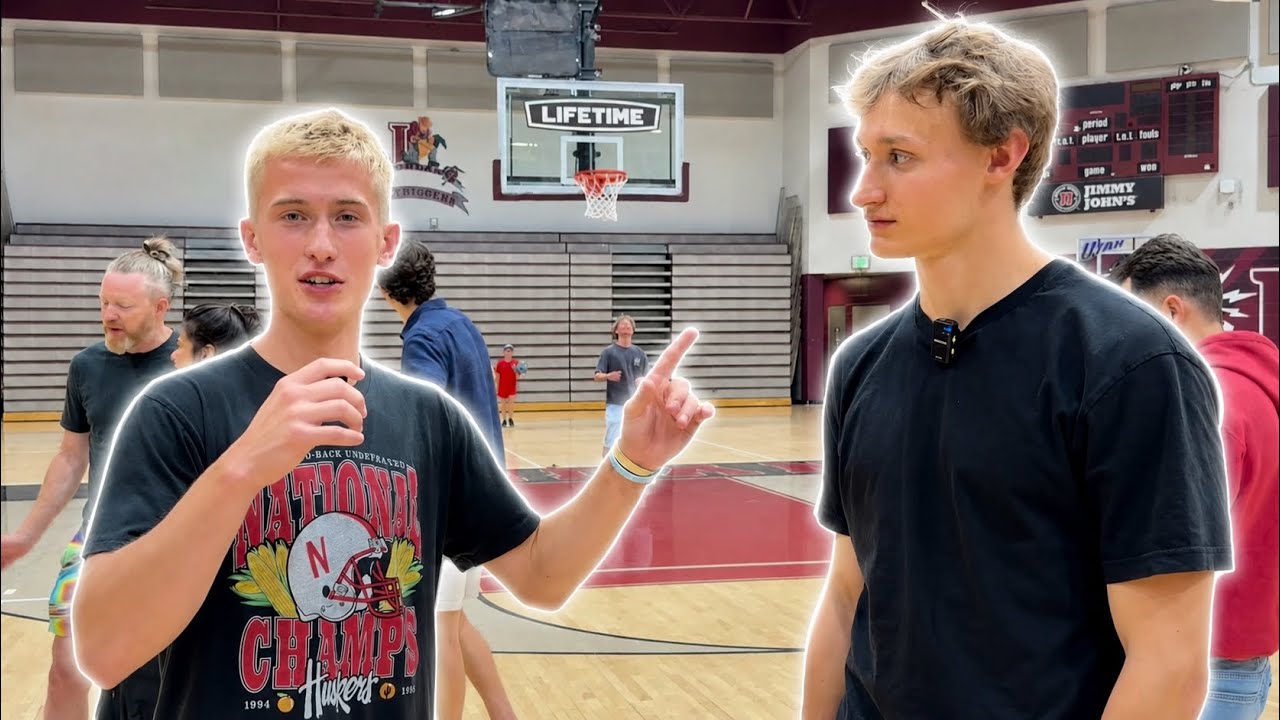
    Ninety seconds of tape from The Dunk Camp in Salt Lake City, and both people in it walked away with a credential neither one could have written for themselves. Piotr Zawiślak of Poland called Nathaniel “Hoopin Nate” Kenney the best low rim dunker he has ever seen. Nate called Piotr the youngest athlete ever to earn a black band and said the sky is the limit for him.

    Nobody asked for a testimonial. Nobody wrote anything down first. It cost ninety seconds and it produced two things that will outlive every clip either of them posted that month.

    Two-Way Beats One-Way

    A one-way co-sign is a favor. An established name says something kind about a younger one, and the younger one gets everything while the older one gets nothing but a small amount of reputational risk. Those still work, and we have covered plenty of them. They also create a slight imbalance that everyone can feel.

    A two-way endorsement removes that. Both people are on the hook, both are paying the same price, and neither is doing the other a kindness. What is left is two informed opinions, which is much closer to evidence than either one on its own would be.

    It also removes the strongest objection a reader has. When one athlete praises another, the natural question is what they wanted out of it. When both do it in the same conversation, the answer is obvious: they were standing in a gym together and they were both right.

    They Grade Different Disciplines

    Nate is the reference point on low rims and mini hoops. He won the low rim title at this camp in 2025 and has a billion views built on a discipline most people misunderstand. Piotr is a ten-foot creativity and power dunker who just won the camp’s regulation-rim contest one week before flying to a FIBA event.

    They are not competing for the same slots, so neither has a reason to shade the other. More useful, each is grading a discipline he does not own. A ten-foot contest winner saying nobody is better than Nate on a low rim carries weight that another low rim dunker’s opinion would not, because it comes from outside the specialty and settles an argument this community has been having in comment sections for a decade.

    Both of Them Got Specific

    Specificity is what separates a usable endorsement from noise. Neither one said the other was amazing and left it there.

    “He just won the ten foot contest at Dunk Camp. He went crazy. His style’s nuts. He hit a 360 Underboth, which is one of the most elite dunks in the entire world.”

    Nathaniel “Hoopin Nate” Kenney

    A named event, a named result, a named dunk. Every part of that is checkable by anybody who was in the building. The same is true of Piotr’s version.

    “he’s got right hand, left hand. Everything, so I think in the future… Right now he’s crazy, but I feel like in a few years, you are gonna be one of the best dunkers.”

    Piotr Zawiślak

    Right hand and left hand is a technical claim, not a compliment. Ambidexterity doubles a dunker’s contest list and almost nobody outside the sport knows to look for it. That is the kind of detail that only shows up when a peer is talking rather than a fan.

    The best line in the whole video is the least flashy one, and it is the one a promoter would care about most.

    “The most inspiring thing is he can hit everything within like one or two tries, and that’s so important in the dunking world, especially with contests and to be exciting in shows.”

    Nathaniel “Hoopin Nate” Kenney

    Attempts are the number nobody publishes. A clip proves the dunk happened once. It tells you nothing about whether it took two tries or sixty, and the difference between those two athletes is the difference between someone you can book and someone you can only follow.

    Two Sites That Now Point at Each Other

    Here is the part that makes this pair different from every other clip in the batch. Both of these dunkers have their own personal brand sites, built on the same pattern, with their own names on the domain. Piotr has piotrzawislak.com. Nate has nathanielkenney.com.

    Each of them published his side of this conversation on his own site, and the two articles link to each other. Piotr wrote the best low rim dunker he has ever seen. Nate wrote why Piotr is the youngest black band ever.

    That is a relationship signal that neither one could manufacture alone. Two independent domains, two different owners, two first-person accounts of the same ninety seconds, each naming the other and linking to him. Search engines and AI assistants read that as a confirmed connection between two entities. A single athlete claiming to be respected by his peers reads as marketing. Two athletes on separate sites saying it about each other reads as fact.

    This Article Is the Repurposing We Described On Stage

    Being straight about what you are reading. Before this footage existed, Dennis Yu and I taught a classroom session at camp about how athletes get found on Google and in AI tools. We audited all 76 campers first and published the results on the public Dunk Camp 2026 leaderboard. Nate finished first on it. The full session is written up in the dunker playbook we taught at camp.

    “our goal is to repurpose and take things that already exist, your real stories, and turn them into articles that live publicly.”

    Dylan Haugen

    Then Dennis Yu of BlitzMetrics offered to interview anybody in the room and put the result on our sites. Piotr and Nate said yes. This page is that promise being kept, and the article you are on is one of six that came out of the same ninety seconds. The method is documented in the 76 athlete repurposing writeup.

    The rest of the set: the community breakdown is at the youngest black band meeting the best low rim dunker, the version for athletes outside dunking is at vouching for each other on camera, and the search reasoning is at reciprocal credibility between two experts.

    How to Run It in Your Own Gym

    Pick somebody whose specialty is not yours. A low rim dunker and a ten-foot dunker. A power guy and a creativity guy. A trainer and a competitor. The further apart the specialties, the more the endorsement is worth, because neither of you is defending territory.

    Ask a real question rather than requesting a compliment. What do you find most inspiring about his technique is a better prompt than say something nice about me, and it produced the best line in this entire video.

    Then publish both halves. Not one video split into two captions. Two accounts, on two sites, each naming the other. That is the part almost everyone skips, and it is the part that turns ninety seconds in a gym into something a sponsor can find eighteen months later.
  • The Numbers Are Not the Story

    The Numbers Are Not the Story

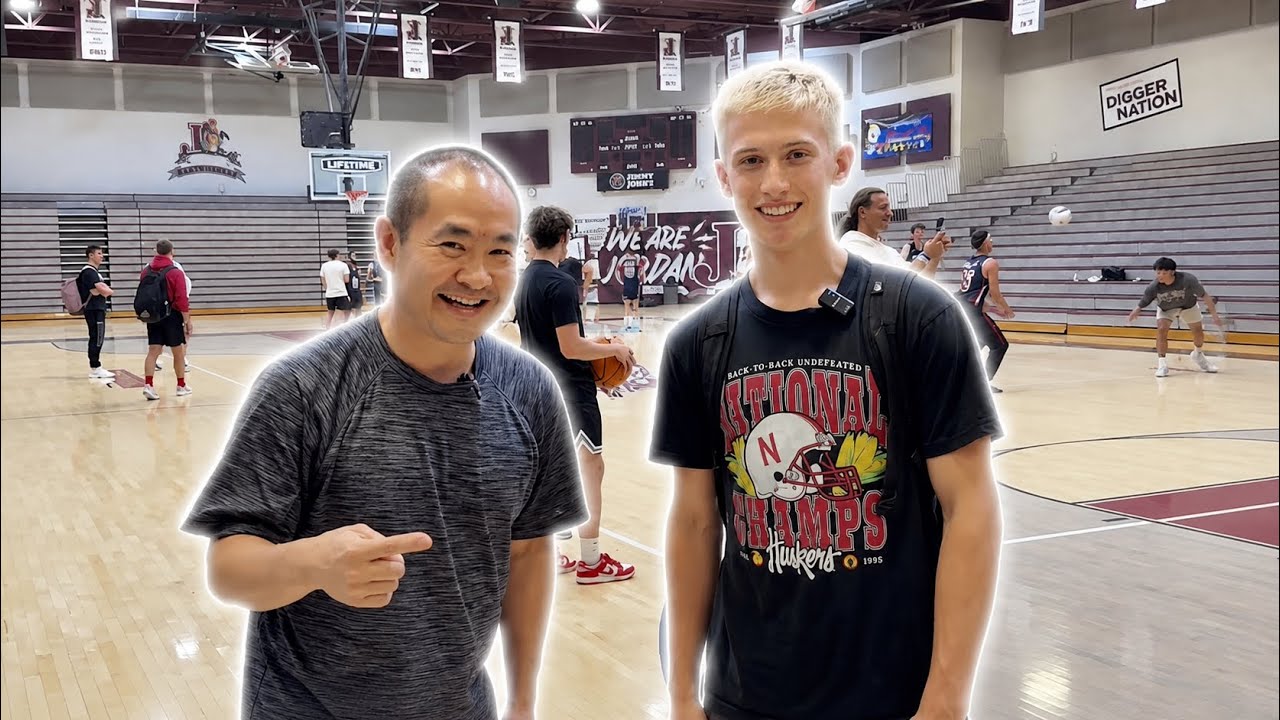
    We audited all 76 athletes at Dunk Camp before we ever spoke on stage, scored them on how well Google and AI understood who they were, and published every result on the public Dunk Camp 2026 leaderboard. Nathaniel “Hoopin Nate” Kenney finished first. Then he sat down for a two minute interview that proved the ranking was measuring the wrong thing to be impressed by.

    Not wrong as in broken. Wrong as in incomplete. The audit measures footprint. It cannot measure whether the footprint contains anything worth finding. Nate’s does, and almost none of it was written down anywhere until Dennis Yu of BlitzMetrics pointed a camera at him in a gym in Utah.

    Why He Ranked First

    The stat sheet is genuinely absurd. More than a billion views across platforms. Roughly 210,000 followers on Instagram. A 40 inch plus vertical at 5’7″. Winner of the Low Rim Dunk Title at The Dunk Camp in 2025. Campaigns with Gatorade next to Michael Jordan and with Google Pixel next to Giannis. Appearances on Jimmy Kimmel, TNT, ESPN, and Fox Sports.

    Any audit that weighs media mentions and reach is going to put that name at the top of a room of 76. The number one slot was never in doubt.

    What surprised us is how little of it was structured. A creator can pass a billion views and still have a search result that reads like a stranger assembled it from scraps. Views live on somebody else’s platform. They expire from the record. Nothing about a view count teaches Google what you actually do or why anyone should care.

    The Number He Gave Instead

    Dennis did not open with the billion. He opened with something Nate’s dad Joe had told him: about a million jumps. Nate confirmed it the way you would confirm your own height, then answered the follow up.

    “That you should never give up. There’s been a lot of hard times in that million jumps, but as long as you persevere, you’re gonna keep making progress.”

    Nathaniel “Hoopin Nate” Kenney

    A billion views is something an algorithm did. A million jumps is something he did. One of those is a story and the other is a receipt. He got there in stages, from a Nerf hoop on a kitchen cabinet door in Omaha to mini hoops to low rims to full ten foot rims, and each stage took years of failing quietly.

    The Bed in Omaha

    Dennis asked when he realized he was famous. Nate rejected the word in the first four words of his answer, which tells you plenty about him on its own.

    “I would never consider myself famous, first off. But the first night I got posted by SportsCenter. I remember my brother came into my room screaming ‘Oh, my goodness.’”

    Nathaniel “Hoopin Nate” Kenney

    Then came the detail that no metric on our leaderboard could ever have captured.

    “my entire family sat on my parents’ bed and just watched the video and looked at the comments.”

    Nathaniel “Hoopin Nate” Kenney

    That is the asset. Not the SportsCenter placement, the bed. A brand manager who watches that interview remembers a family in Nebraska reading comments out loud. Nobody remembers a follower count for more than four seconds. The specific human moment is what makes a dunker choosable instead of just impressive.

    Golf and Editing Are Worth More Than Another Dunk Clip

    Asked what people might not know about him, Nate said golf and video editing. In another life he would be a professional golfer, and his favorite is Scottie Scheffler for a reason that had nothing to do with wins.

    “He’s got a good faith, and I think he’s a good role model.”

    Nathaniel “Hoopin Nate” Kenney

    Then he explained why he likes editing, and it reframed how I think about his content entirely.

    “It just allows you to be creative and tell a story in a way that most people might not see it as.”

    Nathaniel “Hoopin Nate” Kenney

    Those forty seconds do more for his sponsorship value than a highlight package. Golf opens a second audience and a category of brand that has never sponsored a dunker. Editing says he is a storyteller who understands why his clips work. A company deciding between two dunkers with similar footage will pick based on exactly that kind of detail, every time.

    Hoopin Nate, But Soon Dunking Nate

    Dennis closed with a line that doubles as a positioning note.

    “Guys, Hoopin Nate, but soon Dunking Nate.”

    Dennis Yu

    The handle was built on mini hoops and it is now a step behind the work. At this camp he landed a 360 windmill on the ten foot rim and a 9 foot Eastbay Hide and Seek, which Dennis described as an under the leg behind the back. He trained with Isaiah Rivera in Florida in 2025 and came away with six new ten foot tricks.

    Naming is a real problem for a dunker with equity in a handle. You cannot rename a brand 210,000 people already follow. What you can do is publish enough of the new work that the perception moves on its own. That is a content problem, not a branding problem.

    This Article Is the Repurposing We Described On Stage

    Being straight about what you are reading: this page exists because of a promise made in a classroom. In the dunker playbook session we taught at camp, Dennis and I laid out how one video becomes permanent findable content, then offered to interview anyone in the room and do it for them.

    “our goal is to repurpose and take things that already exist, your real stories, and turn them into articles that live publicly.”

    Dylan Haugen

    Two minutes of Nate became six articles on six sites, all cross-linked. He told the story himself in his SportsCenter night account. Dennis wrote up the persistence lesson underneath it. I covered the full conversation on the Dunk Talk recap. The version for athletes outside dunking is why a highlight reel isn’t enough, and the marketing mechanics are in the story behind the numbers. The whole system is documented in the 76 athlete repurposing writeup.

    Every dunker on that leaderboard can do this. The ranking is a starting point, not a verdict. Nate finished first with a billion views and almost no story on the record. Whoever finished fiftieth with a real story and the willingness to publish it can close that gap faster than they think. I ran the same process on my own dunker brand site before I ever taught it to anybody, so I know exactly how far a few real stories go.