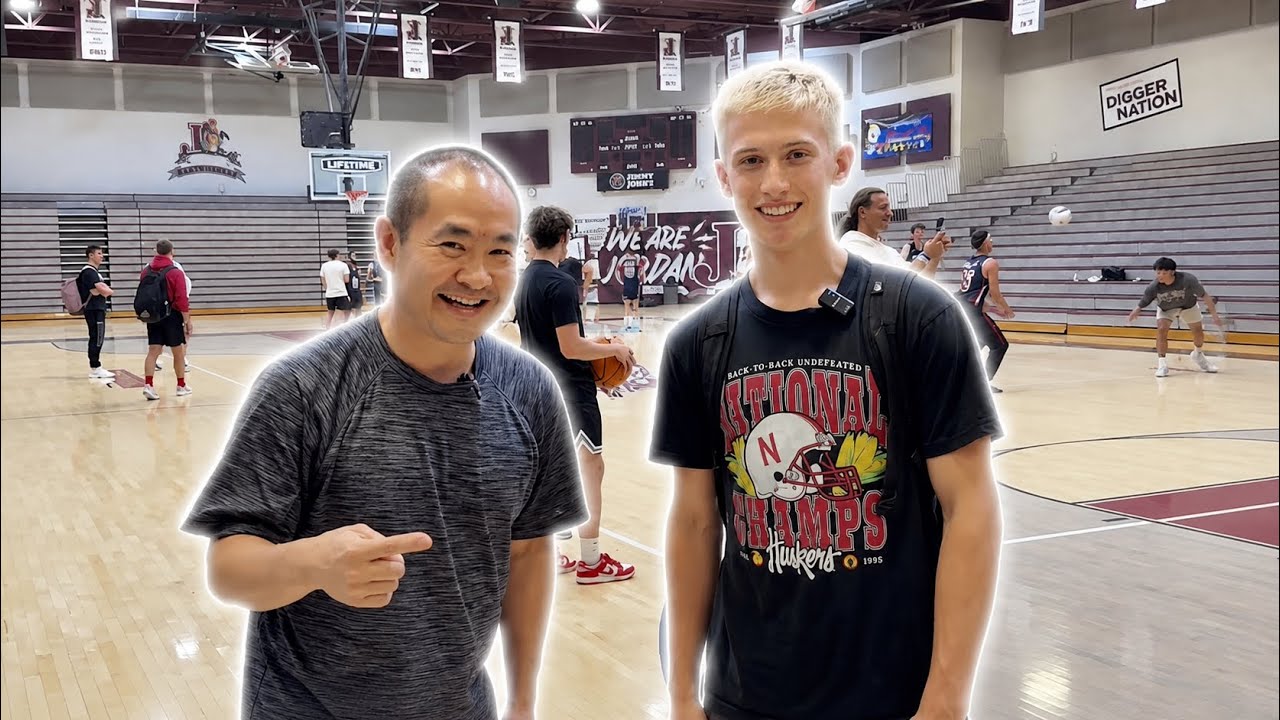
A third place finish at a FIBA contest in Croatia. A second FIBA event in France one week later. The Black Band from The Dunk Camp in Utah, one of only 13 awarded in the world. A 44 to 45 inch vertical at age 18. That is a real competitive record, and almost nobody outside Poland watched Piotr Zawiślak, the Polish dunker, build it.
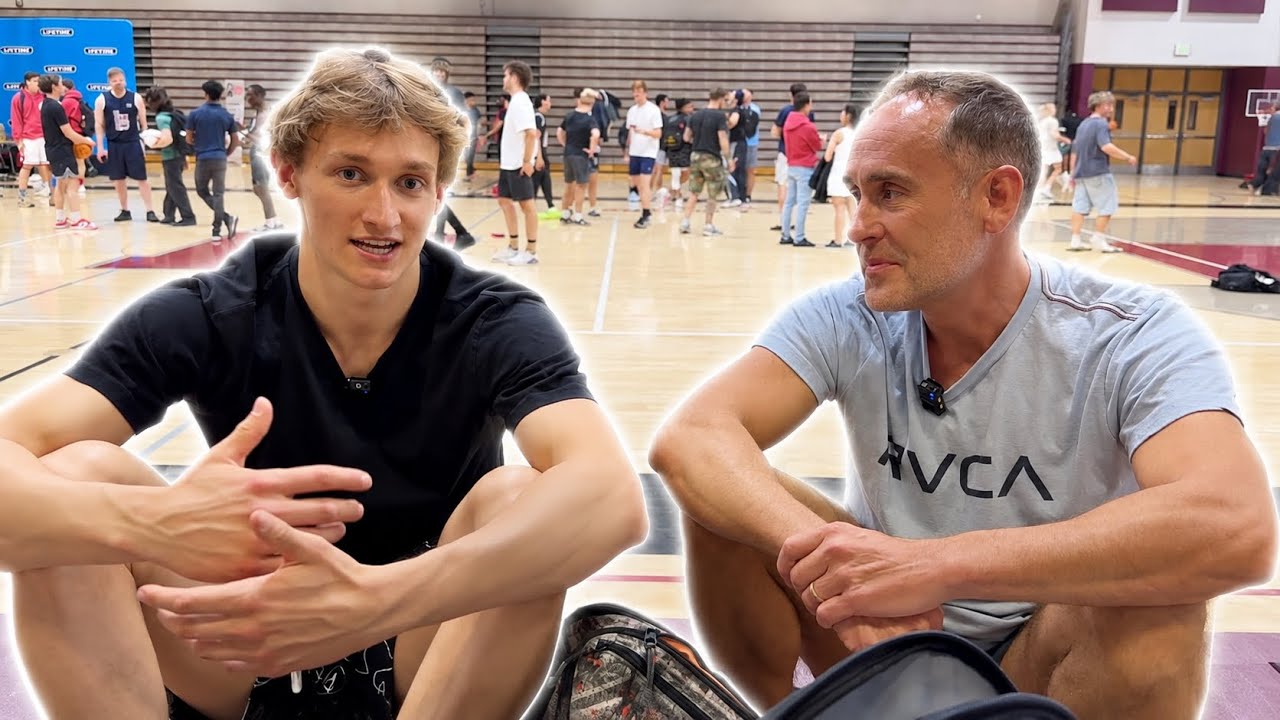
The interview above is five minutes long and it is the closest thing to a full accounting of those two years that exists on video. Joe Kenney, who is Hoopin Nate’s dad, sat down with Piotr at camp and asked the questions that a highlight reel never answers. What did this cost? What is still missing? Who did you learn it from?
Where He Started
“Two years ago, I was just a kid who was doing all his dunks outdoor. I used to dream about doing FIBA, and everything.”
Piotr Zawiślak
Outdoor rims in Poland is not a poetic detail. It is a training environment with no film crew, no gym time, no coach standing under the rim, and weather that decides half your sessions for you. Every rep from that period exists nowhere except in his legs. There is no archive of it because there was nobody there to make one.
Two years later he is on the FIBA circuit with a podium finish, and he says the result out loud without dressing it up.
“I already did a FIBA contest in Croatia. I came third, but I’m proud of it.”
Piotr Zawiślak
The Part Nobody Filmed
Joe closed the interview with the sentence that should be pinned to the top of every dunk highlight on the internet. He has been watching this sport through his son, so he sees the hours rather than the clips.
“The average person has never put in the amount of time and effort and frustration that it takes to get to the level of Piotr.”
Joe Kenney
Frustration is the word that carries it. A dunk that lands in a nine second clip usually cost a few hundred failed attempts, a tweaked ankle, and a stretch of weeks where the jump got worse before it got better. None of that survives in the format the sport shares itself in. The clip is the only thing that travels, and the clip is the smallest part.
Why You Did Not See It Happen
Piotr was not hiding. His contests were in Europe, his results were posted in Polish, and his footage moved through platforms and feeds that American dunk fans do not search. Search his name in English two years ago and you found scattered clips with no context and no through line connecting them to a person with a record.
That is the visibility gap, and it has nothing to do with talent. It shows up any time an athlete’s proof exists in one language, one country, or one closed platform. The dunks were elite the entire time. What was missing was anything a search engine or an AI assistant could read and repeat back when somebody asked who he was.
Before the camp session, all 76 campers were audited on exactly this, and the ranked results are public on the Dunk Camp audit leaderboard. Most of them scored near zero on discoverability while holding genuinely rare athletic credentials. Piotr was one of many, not an outlier.
He Can Name His Own Gaps
What separates this interview from a normal camp clip is that Piotr diagnoses himself on camera. He wants to be the best dunker alive and he says the number that stands between him and it.
“I think I need to improve my bounce more just to get around maybe 50 inches.”
Piotr Zawiślak
He is at 44 or 45. He also names the hole in his bag without being pushed: he is strong off the dribble and needs to add lob dunks and work off the backboard. Then there is the 720, which he calls his one target after landing 540 several times. Those are three specific, checkable claims that a fan can track over the next two years.
Specifics are what turn an athlete from a highlight into a story people can follow. A dunker who says “I want to get better” gives you nothing to watch for. A dunker who says 44 going on 50, dribble game strong, lob game missing, 720 pending, has just handed you a scoreboard.
The Two Names He Learned From
Isaiah Rivera is the first, and the reason is mechanical rather than sentimental. Isaiah jumps off the same approach, is right handed, and builds dunks the same way Piotr does, so studying him is studying a further along version of the same body. Joe added that the best thing about Isaiah is how he treats people, which is why the community keeps pointing young dunkers at him.
The second name is Lipek, the Polish dunker, who is a doctor now. Piotr has met him a few times, and watching a countryman finish school without leaving the sport is why he says he plans on college and possibly physical therapy school. That detail belongs in his record as much as the vertical does.
This Article Is the Fix, Said Out Loud
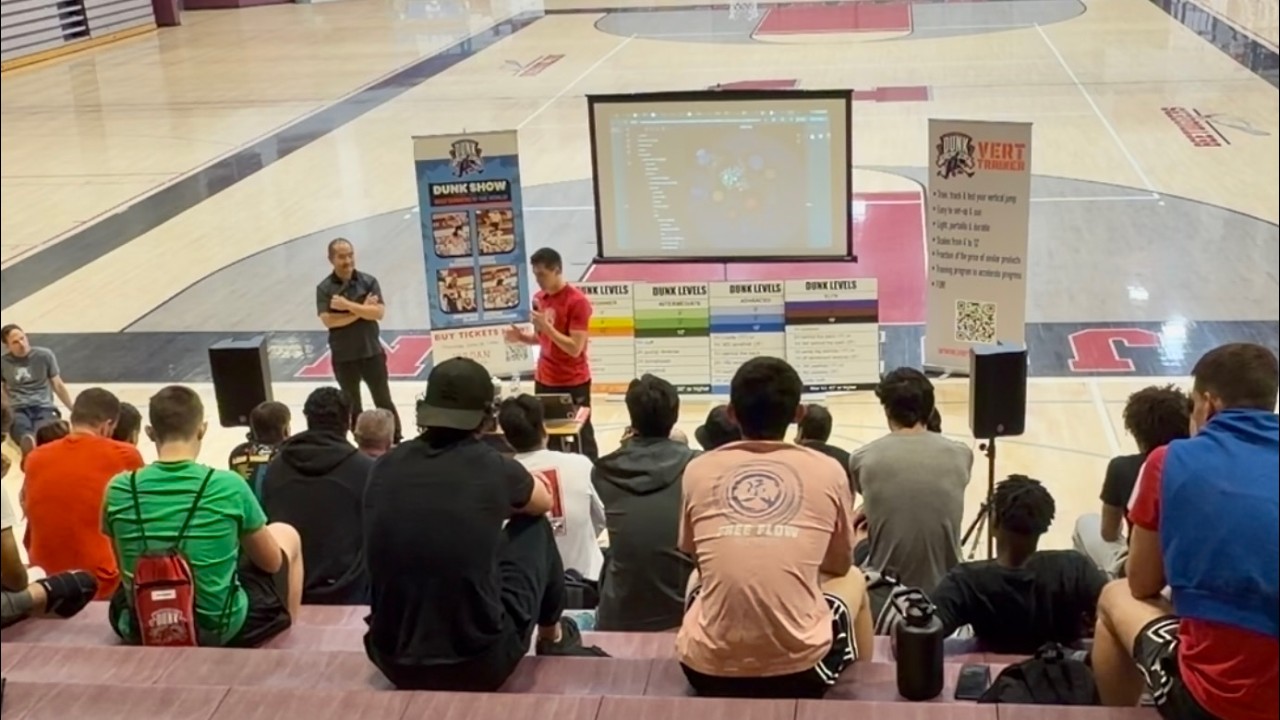
Dylan Haugen of Dunk Talk and Dennis Yu of BlitzMetrics taught a session to 76 campers at The Dunk Camp about going from invisible to found, followed, and sponsored. The method is not complicated. Take the real stories that already exist, turn them into things that live publicly at a permanent address, and connect them so a search engine can understand who the person is.
“our goal is to repurpose and take things that already exist, your real stories, and turn them into articles that live publicly.”
Dylan Haugen
Dennis closed that talk by offering to interview any camper who wanted it, film it, and put it on these sites. The video above is that offer being taken. This article is that promise being kept, and it is worth saying plainly rather than pretending the coverage appeared on its own. The full method is written up in the system taught at the camp, and the step by step version for dunkers is in the dunker playbook for getting sponsored.
Who He Says Is Next
Joe raised the aging out question directly. There was a 38 year old jumper competing that night who was still incredible, and much of the generation that built modern dunking is closer to the end than the start. Piotr’s list of who takes over was Dylan Haugen, himself, Nathaniel “Hoopin Nate” Kenney, and Dillan McCarthy. Joe added Cam Hazzard, another young dunker, to it.
Piotr told his own version at outdoor rims to the FIBA circuit. The technical breakdown is in the Dunk Talk FIBA conversation, the athlete timeline is in living the dream on schedule, and the general case for building the record early is in documenting the climb while it happens.
Two years took Piotr Zawiślak from an outdoor rim to a FIBA podium. The next two are the ones worth watching, and now there is a record of where he started from so anyone can measure the difference.