Tag: Piotr Zawiślak

  • Let Us Trade Talents: Two Dunkers With Opposite Superpowers

    Let Us Trade Talents: Two Dunkers With Opposite Superpowers

    Two dunkers with almost nothing in common athletically made a better two minutes of video than either of them would have made alone. That is not a personality thing. It is structural, and it is repeatable, and most dunkers are pairing themselves with the wrong people.

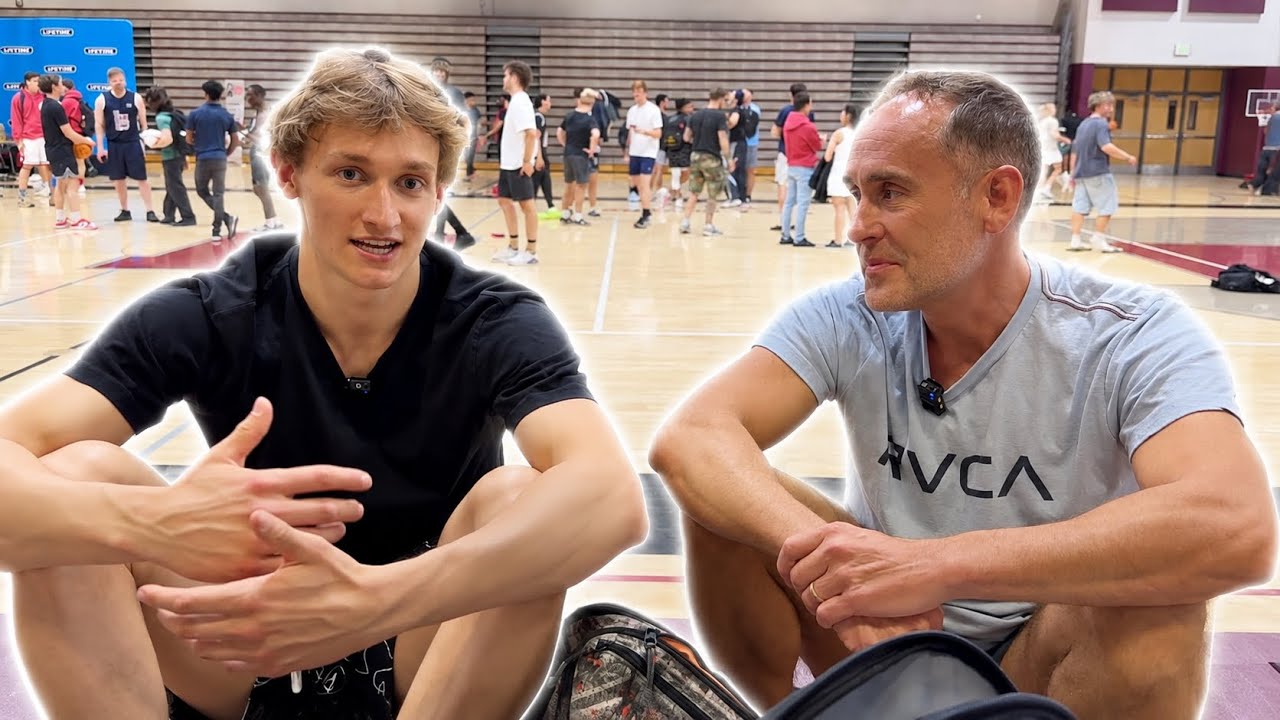
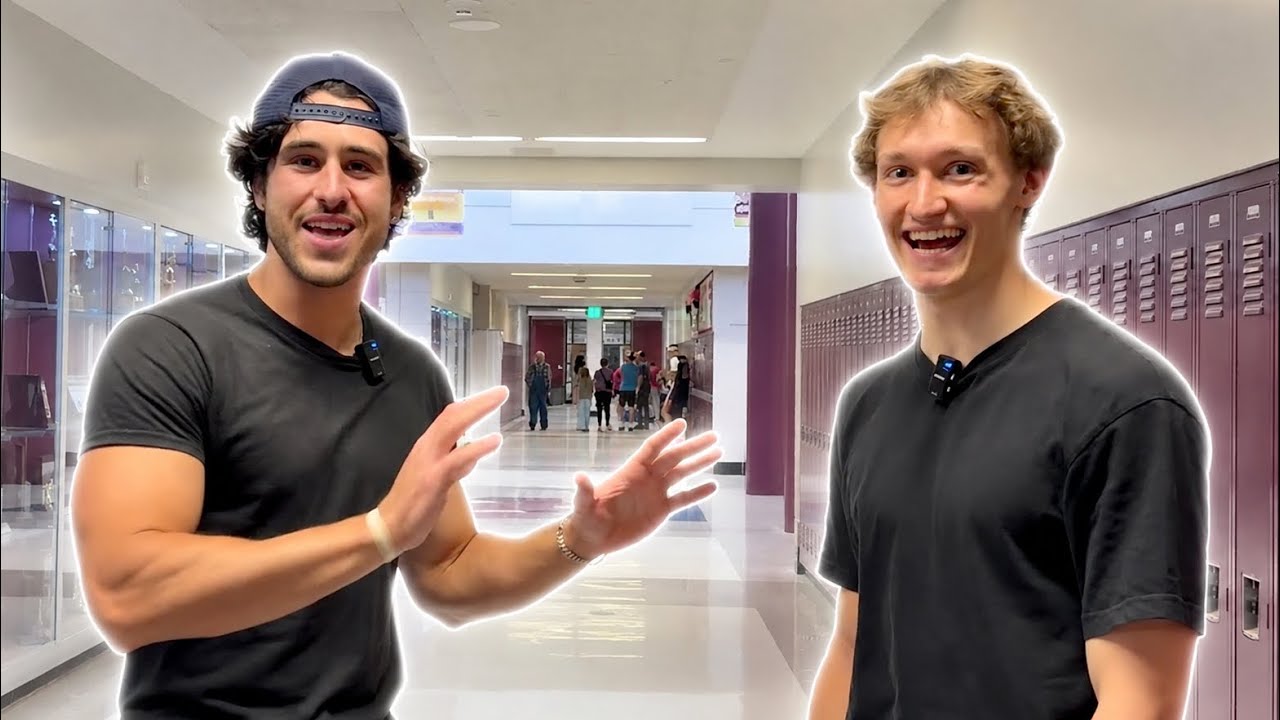
    Ethan Pimstone holds a world record max vertical jump at 52.5 inches. Piotr Zawiślak is 18, from Poland, and the youngest black band the sport has ever had, with a bag built on hand speed rather than altitude. At The Dunk Camp in Salt Lake City we put them in front of one camera and let them interview each other.

    Sameness Produces Compliments. Contrast Produces Questions.

    Put two dunkers with the same skill set on camera and you get an exchange of compliments. They already know how each other trains, so there is nothing to ask. The video becomes a highlight reel with two people standing in front of it.

    Put two opposite specialists on camera and one of them will eventually ask a real question, because there is something in the room he genuinely cannot do. That is exactly what happened here. Ethan stopped praising and started interviewing.

    He asked how Piotr is able to hit those dunks, whether it comes from hand speed training or from reps, what the training looks like, whether he uses a rim or a wall, how often he does it, and whether he has ever used a weighted ball. Six questions. A dunker who could already do 360 Underboth would not have asked a single one of them.

    “this man was hitting dunks that I can’t even fathom hitting. And your age, that’s impressive.”

    Ethan Pimstone

    The praise reads as credible for the same reason. When a world record holder says he cannot picture himself doing something, that carries weight a peer compliment never will, because he has nothing to gain by conceding it.

    The Trade Only Works Because the Gap Is Real

    “Let’s trade. We’ll trade some talents. And then we’ll both be top of the game.”

    Ethan Pimstone

    Ethan got his first dunk at 17 and turned 23 this year. Piotr is 18 and already doing 360 Underboth, 360 Eastbay and 360 inverter. Ethan said out loud that he still cannot do all of that, and Piotr said out loud that Ethan is the craziest jumper he has ever seen. Both statements are true, both are checkable, and neither man had to shrink to make the other one look good.

    That is the tell for a good pairing. If one person has to be the sidekick, you picked wrong. If both people are the best in the room at something and the somethings are different, the video writes itself.

    The Answer That Made the Video Worth Keeping

    Piotr’s routine came out because someone with a real gap asked for it. A lot of low-rim dunking at 15 and 16. Heavy lifting now. Two dunk sessions a week, not five. A lot of hand speed drills learned from Jordan Kilganon’s channel, run daily, with the ball, standing still, just the motion.

    “Daily… when I’m before a important contest or event I’m bringing my ball to the gym. And I’m spending like one hour just doing it.”

    Piotr Zawiślak

    No weighted ball, ever, though he wants to try one. That is the whole program, and it is the reason this video gets saved instead of scrolled past. Kilganon’s own explanation of why he built those drills is in his advice to young dunkers, and Piotr tried them in front of him at the same camp and could not get them.

    Why They Both Now Link to Each Other

    Ethan published his account on his own site. Piotr published his on his. Each one links to the other, in the body of the article, with the other person’s name attached.

    That link is doing more work than a tag on a story post. Google and the language models are both building a map of who exists and how they are connected. A tag disappears in 24 hours and carries no description. A permanent page that names a world record holder, names an 18-year-old black band, states the relationship between them, and links both, adds a fact to that map that neither dunker could have added about himself alone.

    The practical version: when a sponsor, a contest organiser, or an AI assistant goes looking for the best young dunkers in Europe or the highest jumper alive, it reads pages, not comment sections. Two dunkers who describe and link each other are twice as findable, and it costs each of them one paragraph.

    Read them side by side. Ethan on trading talents and Piotr on the craziest jumper cover the same two minutes and notice almost entirely different things, which is another argument for pairing opposites.

    This Article Is the Thing It Is Describing

    Being straight about it: you are reading one of six articles built from one two-minute video. There is a first-person account on Ethan’s site, a first-person account on Piotr’s, a community breakdown on Dunk Talk, this one, a version for other sports, and a marketing breakdown on BlitzMetrics. Six domains, six angles, no duplicated text, all pointing at each other and at the two dunkers.

    That pattern got taught on stage at this camp before any of it was filmed. Dennis Yu and I ran a classroom session for 76 campers, all of whom were audited beforehand, with the results published as a public leaderboard at the Dunk Camp 2026 audit leaderboard. The talk covered why a Knowledge Panel confidence score is a distribution issue rather than a vanity metric, and it closed with an offer to film anyone who wanted it. This video is that offer being kept.

    The session itself is written up in the dunker’s playbook from camp, and the full method is in the repurposing system from camp.

    How to Run This Yourself

    Name the thing you are worst at, then name the dunker who is best at it. That person is your pairing. If the name that comes to mind is someone who dunks exactly like you, you are picking for comfort instead of contrast.

    Get the camera up and ask about the gap instead of trading praise. Ask what the training looks like, how often, with what equipment, since when. Specific questions get specific answers, and specific answers are what people bookmark.

    Then both of you publish it, in your own words, on your own pages, within the week, and link to each other by name. The clip lives on somebody’s feed for two days. The pages stay up, get indexed, get read by the systems that decide who is real in this sport, and keep working while you are asleep.

    Ethan left camp with a drill list. Piotr left with a jumping model to study. Everybody reading got the routine that built the best hands under 20, for free, because two people who are not alike stood in front of one camera and asked each other honest questions.
  • Two Specialists, One Camera: Why Mutual Endorsement Works

    Two Specialists, One Camera: Why Mutual Endorsement Works

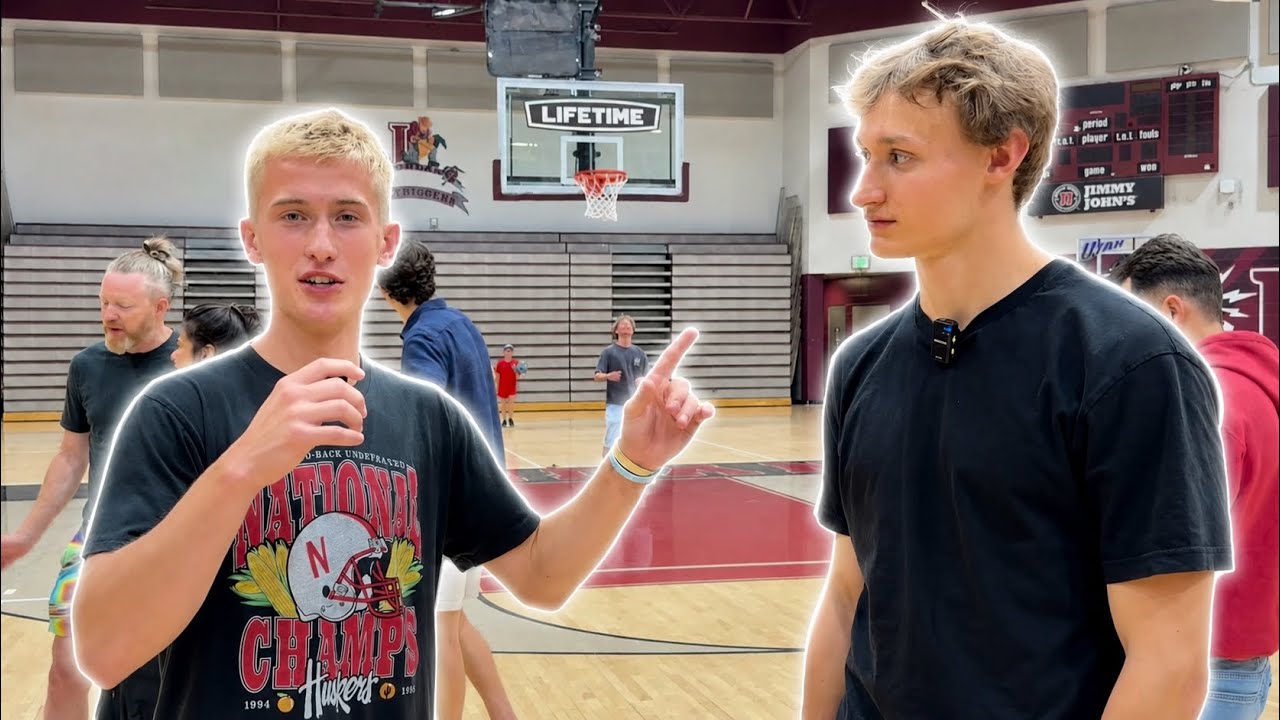
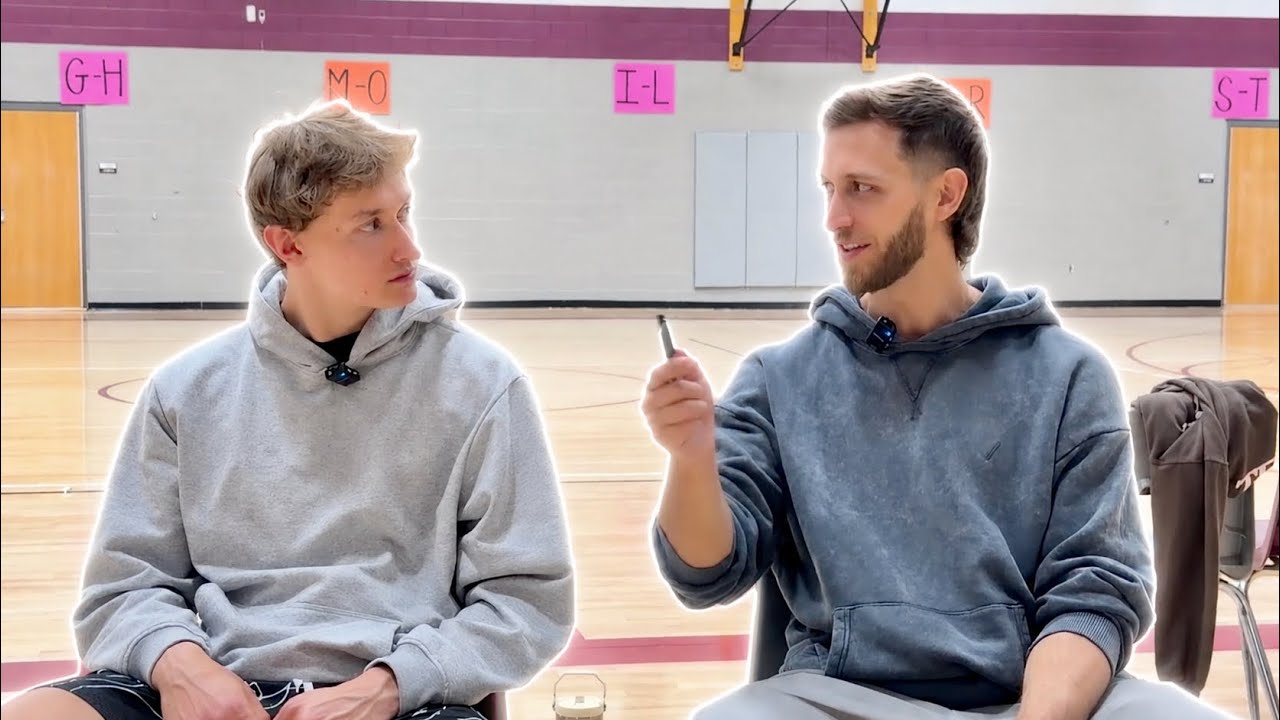
    Ninety seconds of tape from The Dunk Camp in Salt Lake City, and both people in it walked away with a credential neither one could have written for themselves. Piotr Zawiślak of Poland called Nathaniel “Hoopin Nate” Kenney the best low rim dunker he has ever seen. Nate called Piotr the youngest athlete ever to earn a black band and said the sky is the limit for him.

    Nobody asked for a testimonial. Nobody wrote anything down first. It cost ninety seconds and it produced two things that will outlive every clip either of them posted that month.

    Two-Way Beats One-Way

    A one-way co-sign is a favor. An established name says something kind about a younger one, and the younger one gets everything while the older one gets nothing but a small amount of reputational risk. Those still work, and we have covered plenty of them. They also create a slight imbalance that everyone can feel.

    A two-way endorsement removes that. Both people are on the hook, both are paying the same price, and neither is doing the other a kindness. What is left is two informed opinions, which is much closer to evidence than either one on its own would be.

    It also removes the strongest objection a reader has. When one athlete praises another, the natural question is what they wanted out of it. When both do it in the same conversation, the answer is obvious: they were standing in a gym together and they were both right.

    They Grade Different Disciplines

    Nate is the reference point on low rims and mini hoops. He won the low rim title at this camp in 2025 and has a billion views built on a discipline most people misunderstand. Piotr is a ten-foot creativity and power dunker who just won the camp’s regulation-rim contest one week before flying to a FIBA event.

    They are not competing for the same slots, so neither has a reason to shade the other. More useful, each is grading a discipline he does not own. A ten-foot contest winner saying nobody is better than Nate on a low rim carries weight that another low rim dunker’s opinion would not, because it comes from outside the specialty and settles an argument this community has been having in comment sections for a decade.

    Both of Them Got Specific

    Specificity is what separates a usable endorsement from noise. Neither one said the other was amazing and left it there.

    “He just won the ten foot contest at Dunk Camp. He went crazy. His style’s nuts. He hit a 360 Underboth, which is one of the most elite dunks in the entire world.”

    Nathaniel “Hoopin Nate” Kenney

    A named event, a named result, a named dunk. Every part of that is checkable by anybody who was in the building. The same is true of Piotr’s version.

    “he’s got right hand, left hand. Everything, so I think in the future… Right now he’s crazy, but I feel like in a few years, you are gonna be one of the best dunkers.”

    Piotr Zawiślak

    Right hand and left hand is a technical claim, not a compliment. Ambidexterity doubles a dunker’s contest list and almost nobody outside the sport knows to look for it. That is the kind of detail that only shows up when a peer is talking rather than a fan.

    The best line in the whole video is the least flashy one, and it is the one a promoter would care about most.

    “The most inspiring thing is he can hit everything within like one or two tries, and that’s so important in the dunking world, especially with contests and to be exciting in shows.”

    Nathaniel “Hoopin Nate” Kenney

    Attempts are the number nobody publishes. A clip proves the dunk happened once. It tells you nothing about whether it took two tries or sixty, and the difference between those two athletes is the difference between someone you can book and someone you can only follow.

    Two Sites That Now Point at Each Other

    Here is the part that makes this pair different from every other clip in the batch. Both of these dunkers have their own personal brand sites, built on the same pattern, with their own names on the domain. Piotr has piotrzawislak.com. Nate has nathanielkenney.com.

    Each of them published his side of this conversation on his own site, and the two articles link to each other. Piotr wrote the best low rim dunker he has ever seen. Nate wrote why Piotr is the youngest black band ever.

    That is a relationship signal that neither one could manufacture alone. Two independent domains, two different owners, two first-person accounts of the same ninety seconds, each naming the other and linking to him. Search engines and AI assistants read that as a confirmed connection between two entities. A single athlete claiming to be respected by his peers reads as marketing. Two athletes on separate sites saying it about each other reads as fact.

    This Article Is the Repurposing We Described On Stage

    Being straight about what you are reading. Before this footage existed, Dennis Yu and I taught a classroom session at camp about how athletes get found on Google and in AI tools. We audited all 76 campers first and published the results on the public Dunk Camp 2026 leaderboard. Nate finished first on it. The full session is written up in the dunker playbook we taught at camp.

    “our goal is to repurpose and take things that already exist, your real stories, and turn them into articles that live publicly.”

    Dylan Haugen

    Then Dennis Yu of BlitzMetrics offered to interview anybody in the room and put the result on our sites. Piotr and Nate said yes. This page is that promise being kept, and the article you are on is one of six that came out of the same ninety seconds. The method is documented in the 76 athlete repurposing writeup.

    The rest of the set: the community breakdown is at the youngest black band meeting the best low rim dunker, the version for athletes outside dunking is at vouching for each other on camera, and the search reasoning is at reciprocal credibility between two experts.

    How to Run It in Your Own Gym

    Pick somebody whose specialty is not yours. A low rim dunker and a ten-foot dunker. A power guy and a creativity guy. A trainer and a competitor. The further apart the specialties, the more the endorsement is worth, because neither of you is defending territory.

    Ask a real question rather than requesting a compliment. What do you find most inspiring about his technique is a better prompt than say something nice about me, and it produced the best line in this entire video.

    Then publish both halves. Not one video split into two captions. Two accounts, on two sites, each naming the other. That is the part almost everyone skips, and it is the part that turns ninety seconds in a gym into something a sponsor can find eighteen months later.

  • Jordan Kilganon’s Advice to the Next Great Dunker

    Jordan Kilganon’s Advice to the Next Great Dunker

    Praise is the cheapest thing at a dunk camp. Everybody in the gym is good, everybody is filming, and by Wednesday you have been told you are crazy about forty times. None of it is worth anything a month later.

    What Jordan Kilganon gave 18-year-old Piotr Zawiślak at The Dunk Camp was a different item. He did open with praise, and the praise was strong. Then he spent the rest of the interview laying out a three-part structure for how a dunking career goes wrong, in order, with the fix for each part. That is not a compliment. That is a framework for the next ten years, delivered by the person best qualified to describe them.

    Part One: Do Not Let It Become Normal

    Kilganon started with the assessment so the advice would land, and the assessment was blunt.

    “He’s 18 and he’s doing dunks that took me forever to make, so I’m excited to see what he’s got in the future.”

    Jordan Kilganon

    Then he flipped immediately to the risk. He said the only thing Piotr has to focus on is being consistent with his focus and appreciating what he has got. Then he acted out the version of Piotr that would waste it: travelling constantly, hitting crazy dunks, sitting near the top of the sport, and treating all of it as the ordinary background of a normal life.

    “No. You can’t have that kind of attitude.”

    Jordan Kilganon

    “You need to appreciate every moment and keep earning it.”

    Jordan Kilganon

    Every dunker who fell off did it in that order. Not injury first. Entitlement first, then the training gets softer, then the injury lands on a body that stopped being prepared. Kilganon is describing a failure he has watched happen to peers, which is why he sequenced it ahead of everything else he said.

    Part Two: The External Competition Runs Out

    He then named the fuel Piotr is currently running on, correctly. Right now Piotr is competing mentally, in his head, against other dunkers. Everyone climbing is. You pick names, you chase them, you pass them.

    “eventually, there’ll be no more dunkers to compete with. So it’s gonna be competing with yourself.”

    Jordan Kilganon

    “I was always scared of that moment.”

    Jordan Kilganon

    That admission is the most valuable thirty seconds in the video, because it is the one piece of career information a young dunker cannot get anywhere else. There is no content about it. Nobody makes a training video about what to do when the leaderboard stops motivating you, since almost nobody gets far enough up it to find out.

    Piotr is eighteen and his list of people to catch is still long. The value of hearing this now is that he gets a decade of warning. When the list empties, he will already know what the empty feeling is and that the person he looked up to felt it too.

    Part Three: Change What You Are Improving

    The fix he gave is not motivational. It is mechanical, and he ran it on himself first.

    “That’s why I invented the ball handling drills, is I can only jump so much, but I wanna keep getting better. How do I do that without jumping?”

    Jordan Kilganon

    Vertical jump has a hard ceiling. Every dunker finds theirs, and after a certain age the number only goes one direction. Kilganon reached his, decided that a limit on one measurement was not a limit on improvement, and went looking for a second measurement with no known top.

    Ball handling was that measurement. It is why the modern trick bag looks the way it does. A generation of dunkers now train hands as a separate discipline because one guy refused to accept that his best year was behind him just because his jump was.

    The Framework Already Worked on Piotr Once

    Here is the detail that makes this more than a nice moment. In a separate camp interview with world record jumper Ethan Pimstone, Piotr explained where his hand speed came from.

    “I’ve seen some drill at Jordan Kilganon’s channel. And I started doing it a lot.”

    Piotr Zawiślak

    “Daily… when I’m before a important contest or event I’m bringing my ball to the gym. And I’m spending like one hour just doing it.”

    Piotr Zawiślak

    Kilganon solved his own ceiling problem, published the solution on YouTube, and a teenager in Poland picked it up and ran it daily for years before the two of them were ever in the same building. The hands that made Kilganon say those dunks took him forever to learn were built on Kilganon’s own material.

    Then they met, and Piotr tried the drills next to him.

    “I was trying to do some of his drills, and I just couldn’t get it, and he was doing it with ease.”

    Piotr Zawiślak

    Two videos, two different interviews, filmed days apart at the same camp. Neither one alone tells that story. Both of them together make a documented line from a man’s training problem in Canada to a teenager’s morning routine in Poland to the moment they finally stood on the same court. The other half of it is in two dunkers with opposite superpowers.

    This Article Is the Second Half of the Interview

    Being straight about what you are reading: this is one of five articles built from one two and a half minute video, each on a different site, each taking a different angle, all cross-linked. That is deliberate, and it is the exact method Dennis Yu and I taught on stage at this camp before a single interview was filmed.

    We audited all 76 campers ahead of the session and published the results on the Dunk Camp 2026 leaderboard, then walked through how one video becomes a site, an article set, and a search footprint that holds up years later. The session write-up is in the dunker’s playbook from camp, and the mechanics are in the repurposing system behind it.

    Dennis closed that session by offering to interview anyone who wanted it and put the result on our sites. This video is that offer being honored. The article is the part almost every dunker skips, and skipping it is why most of these moments vanish.

    What To Do When a Legend Gives You Ninety Seconds

    Write down the exact words the same night. Not the feeling, the words. “You need to appreciate every moment and keep earning it” is a rule you can check yourself against. “He gave me great advice” is a memory that decays into nothing by December.

    Keep the uncomfortable parts in. The line about being scared of running out of rivals is the piece that makes the whole exchange read as real, and it is the piece most people would edit out because it sounds negative. It is the most useful sentence in the video.

    Then put it on a page you own with both names on it. A quote living inside somebody else’s video does not surface when a contest organizer or a sponsor searches your name, and it does not surface when an AI assistant gets asked who the best young dunkers in Europe are. Piotr’s own account is meeting the reason he started, the community breakdown is about running out of people to beat, the cross-sport version is eventually you compete with yourself, and the business translation is the ceiling problem.

    Kilganon’s last instruction was to be desperate to get better all the time with all your time possible. Do that with the training. Then spend twenty minutes doing it with the record, because a framework you cannot find again in five years is a framework you never really received.

  • Getting Filmed by Dunkademics Is a Credential

    Getting Filmed by Dunkademics Is a Credential

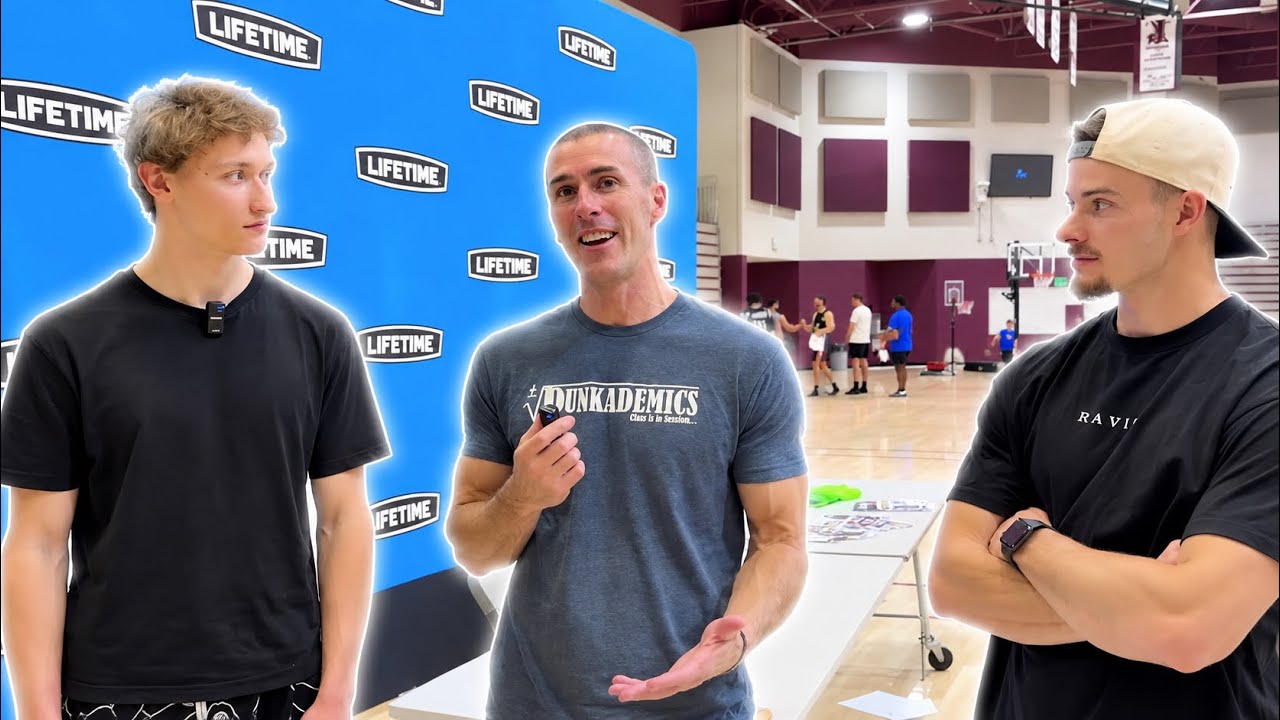
    Every dunker treats a Dunkademics feature the same way: as a view count. You get in the clip, the clip does 400,000 views, you screenshot the comments, and three weeks later it is gone. That is the wrong unit of measurement. The views expire. The sentence that came out of Billy Doran’s mouth while the camera was on does not.

    At The Dunk Camp this summer, Billy Doran of Dunkademics stood next to Piotr Zawiślak and said this on the record:

    “He’s crazy. He’s young in the game and he’s already black band. That’s, it’s insane.”

    Billy Doran, Dunkademics

    That is not a compliment. That is a credential, issued by the person with the most standing in freestyle dunking, on video, with a date attached. Treat it accordingly.

    Why Billy’s Opinion Carries Weight

    Credentials only mean something when the issuer means something. Billy has been filming dunkers since 2007 and produced for Ballislife, Hoopmixtape, Mars Reel and the Drew League before Dunkademics existed. He runs the gym in Los Angeles where a lot of the sport’s best footage gets shot. If freestyle dunking has a system of record, he operates it.

    So when he lists the most impressive dunkers he has ever filmed and names T-Dub for balance and style, Cam Hazzard for what is happening right now, Kao as the freakiest athlete he has seen in person at 6 foot 10, and Donovan Hawkins as a dunking machine, that list functions like a governing body’s rankings even though no governing body issued it. He published his own account of it in the most impressive dunkers he has filmed.

    Being placed in that conversation at eighteen is the most valuable thing that happened to Piotr that week, and it did not involve him dunking any higher than usual.

    Exposure Expires. Corroboration Compounds.

    A clip has a half-life of about 48 hours. Then the algorithm moves on and the only people who can find it again are the ones who already follow you. Nothing about that helps a sponsor doing due diligence eight months later, or a tournament organizer deciding who to invite, or an AI assistant answering a question about who the best young dunkers in Europe are.

    What helps in all three of those cases is a page that says, plainly and with a link, that the founder of Dunkademics said Piotr is already black band at eighteen and only needs a few inches of vertical to be in the top conversation. That page does not decay. It gets indexed, it gets cited, and it can be read by a person or a machine years after the clip is unfindable.

    The specific note is what makes it credible. Billy did not just praise him. He gave a defect list.

    “if he gains a few inches of vert… ’cause he’s already got the hand speed, the technique stuff like that.”

    Billy Doran, Dunkademics

    Anybody can generate praise. Almost nobody can generate praise that includes a specific, checkable weakness, because that only comes from someone who actually watched and actually knows. The critique is the part that makes the compliment believable.

    This Article Is the Thing It Is Describing

    Being straight about it: what you are reading is one of six articles built from a single four-minute interview. There is a first-person version on Piotr’s own site, a first-person version on Billy’s, a breakdown for the dunk community, a version for athletes outside this sport, and a marketing version. Same source, six different angles, six different domains, all cross-linked.

    That is exactly the method Dennis Yu and I taught on stage at camp before any of these interviews were shot. We audited all 76 campers ahead of time and published the results on the Dunk Camp 2026 leaderboard, then walked through how one video becomes a site, an article set, and a search footprint. The full session write-up is in the dunker’s playbook from camp, and the mechanics are in the repurposing system we ran on 76 athletes.

    Dennis closed that session with an offer: we will interview you, make a little video, and put it on our assets. This video is that promise being kept, and this article is the second half of it. Skipping the second half is where most people lose the value.

    What To Do the Next Time Someone Films You

    Get the URL the day it goes up. Not a screenshot, not a repost, the actual link. Save it somewhere that is not your camera roll, because your camera roll is not a filing system and you will not find it in a year.

    Write down what was said about you, word for word. Do not paraphrase it into something flatter. “He’s young in the game and he’s already black band” carries information that “Billy said nice things about me” does not. If someone gave you a note to work on, write that down too. It proves the conversation was real.

    Then publish it on a page you control, with the person’s name, what they run, and a link to them. That last part matters more than it sounds. A page that names a recognized entity and links to it is legible to search engines and to AI models in a way that a caption on a repost is not.

    Piotr did it himself in his account of dunking in front of Dunkademics, where he wrote down the vertical note and what he plans to do about it. The community-wide breakdown of Billy’s list is on the Dunk Talk version of this conversation.

    The Part Nobody Films

    Hyrum Fechser, who posts as @hyt_check, was in this interview and said the coolest part of camp for him was seeing these guys in person. He also said he wished he had caught Piotr’s Monday session live instead of the highlights. Two dunkers who know each other’s footage, standing in the same gym for the first time.

    That moment has no view count. It has no clip. It exists now only because somebody wrote it down, which is the entire argument. The version of this for athletes in every other sport is when the authority in your sport films you, and the search and entity reasoning behind it is in coverage from the authority in your niche.

    Billy’s last line to Piotr was to stay healthy, stay consistent, and work hard. Good advice for the training. The rest of it is on you to document.

  • What Two Years Actually Took: Inside Piotr Zawiślak’s Rise

    What Two Years Actually Took: Inside Piotr Zawiślak’s Rise

    A third place finish at a FIBA contest in Croatia. A second FIBA event in France one week later. The Black Band from The Dunk Camp in Utah, one of only 13 awarded in the world. A 44 to 45 inch vertical at age 18. That is a real competitive record, and almost nobody outside Poland watched Piotr Zawiślak, the Polish dunker, build it.

    The interview above is five minutes long and it is the closest thing to a full accounting of those two years that exists on video. Joe Kenney, who is Hoopin Nate’s dad, sat down with Piotr at camp and asked the questions that a highlight reel never answers. What did this cost? What is still missing? Who did you learn it from?

    Where He Started

    “Two years ago, I was just a kid who was doing all his dunks outdoor. I used to dream about doing FIBA, and everything.”

    Piotr Zawiślak

    Outdoor rims in Poland is not a poetic detail. It is a training environment with no film crew, no gym time, no coach standing under the rim, and weather that decides half your sessions for you. Every rep from that period exists nowhere except in his legs. There is no archive of it because there was nobody there to make one.

    Two years later he is on the FIBA circuit with a podium finish, and he says the result out loud without dressing it up.

    “I already did a FIBA contest in Croatia. I came third, but I’m proud of it.”

    Piotr Zawiślak

    The Part Nobody Filmed

    Joe closed the interview with the sentence that should be pinned to the top of every dunk highlight on the internet. He has been watching this sport through his son, so he sees the hours rather than the clips.

    “The average person has never put in the amount of time and effort and frustration that it takes to get to the level of Piotr.”

    Joe Kenney

    Frustration is the word that carries it. A dunk that lands in a nine second clip usually cost a few hundred failed attempts, a tweaked ankle, and a stretch of weeks where the jump got worse before it got better. None of that survives in the format the sport shares itself in. The clip is the only thing that travels, and the clip is the smallest part.

    Why You Did Not See It Happen

    Piotr was not hiding. His contests were in Europe, his results were posted in Polish, and his footage moved through platforms and feeds that American dunk fans do not search. Search his name in English two years ago and you found scattered clips with no context and no through line connecting them to a person with a record.

    That is the visibility gap, and it has nothing to do with talent. It shows up any time an athlete’s proof exists in one language, one country, or one closed platform. The dunks were elite the entire time. What was missing was anything a search engine or an AI assistant could read and repeat back when somebody asked who he was.

    Before the camp session, all 76 campers were audited on exactly this, and the ranked results are public on the Dunk Camp audit leaderboard. Most of them scored near zero on discoverability while holding genuinely rare athletic credentials. Piotr was one of many, not an outlier.

    He Can Name His Own Gaps

    What separates this interview from a normal camp clip is that Piotr diagnoses himself on camera. He wants to be the best dunker alive and he says the number that stands between him and it.

    “I think I need to improve my bounce more just to get around maybe 50 inches.”

    Piotr Zawiślak

    He is at 44 or 45. He also names the hole in his bag without being pushed: he is strong off the dribble and needs to add lob dunks and work off the backboard. Then there is the 720, which he calls his one target after landing 540 several times. Those are three specific, checkable claims that a fan can track over the next two years.

    Specifics are what turn an athlete from a highlight into a story people can follow. A dunker who says “I want to get better” gives you nothing to watch for. A dunker who says 44 going on 50, dribble game strong, lob game missing, 720 pending, has just handed you a scoreboard.

    The Two Names He Learned From

    Isaiah Rivera is the first, and the reason is mechanical rather than sentimental. Isaiah jumps off the same approach, is right handed, and builds dunks the same way Piotr does, so studying him is studying a further along version of the same body. Joe added that the best thing about Isaiah is how he treats people, which is why the community keeps pointing young dunkers at him.

    The second name is Lipek, the Polish dunker, who is a doctor now. Piotr has met him a few times, and watching a countryman finish school without leaving the sport is why he says he plans on college and possibly physical therapy school. That detail belongs in his record as much as the vertical does.

    This Article Is the Fix, Said Out Loud

    Dylan Haugen of Dunk Talk and Dennis Yu of BlitzMetrics taught a session to 76 campers at The Dunk Camp about going from invisible to found, followed, and sponsored. The method is not complicated. Take the real stories that already exist, turn them into things that live publicly at a permanent address, and connect them so a search engine can understand who the person is.

    “our goal is to repurpose and take things that already exist, your real stories, and turn them into articles that live publicly.”

    Dylan Haugen

    Dennis closed that talk by offering to interview any camper who wanted it, film it, and put it on these sites. The video above is that offer being taken. This article is that promise being kept, and it is worth saying plainly rather than pretending the coverage appeared on its own. The full method is written up in the system taught at the camp, and the step by step version for dunkers is in the dunker playbook for getting sponsored.

    Who He Says Is Next

    Joe raised the aging out question directly. There was a 38 year old jumper competing that night who was still incredible, and much of the generation that built modern dunking is closer to the end than the start. Piotr’s list of who takes over was Dylan Haugen, himself, Nathaniel “Hoopin Nate” Kenney, and Dillan McCarthy. Joe added Cam Hazzard, another young dunker, to it.

    Piotr told his own version at outdoor rims to the FIBA circuit. The technical breakdown is in the Dunk Talk FIBA conversation, the athlete timeline is in living the dream on schedule, and the general case for building the record early is in documenting the climb while it happens.

    Two years took Piotr Zawiślak from an outdoor rim to a FIBA podium. The next two are the ones worth watching, and now there is a record of where he started from so anyone can measure the difference.

  • When Your Idol Co-Signs You on Camera

    When Your Idol Co-Signs You on Camera

    Elite dunkers compliment younger dunkers constantly. It happens at every session, every camp, every contest warmup. Almost none of it survives the week. The nice thing gets said, the people go home, and the only record is a memory that the person being complimented can never prove.

    This one survived, because there was a camera on it.

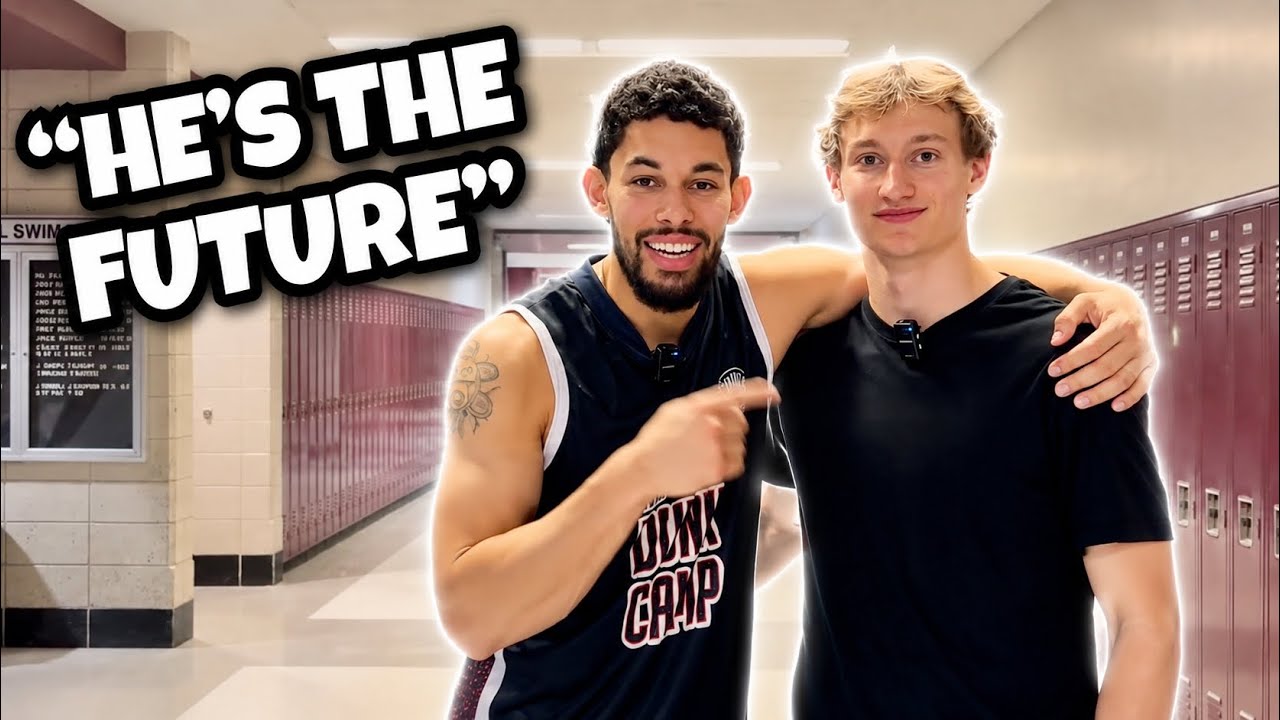
    “He’s the future, man. He is the future.”

    Isaiah Rivera

    That’s Isaiah Rivera at The Dunk Camp 2026 in Salt Lake City, talking about Piotr Zawiślak, who is 18 and from Poland and has named Isaiah as his favorite dunker since before anyone in the sport knew who Piotr was. The subject of this article is not the compliment. It’s what happens to a compliment when you record it, publish it, and give it a URL.

    A Co-Sign With a Receipt Attached

    What makes this clip usable is that Isaiah didn’t stop at the nice sentence. He gave a specific, verifiable reason.

    “I missed 360 Underboth a bunch of times. You hit it second try at a session.”

    Isaiah Rivera

    An elite pro publicly stating that he repeatedly missed a dunk that an 18-year-old landed on his second attempt, at the same session, is a very different asset than “he’s really good.” It’s checkable. It has a place, a dunk name, and an attempt count. Anyone can watch the tape and decide for themselves whether they believe it.

    “I can’t fathom even doing the stuff you’re doing at 18 years old.”

    Isaiah Rivera

    He added that his own vertical at that age was nowhere near 44 or 45 inches, that his first 360 Eastbay barely went down, and that watching Piotr made him feel old. Then he widened it out past the two of them: “it also shows me how much the dunk game’s evolving.”

    The Part Nobody Could Have Scripted

    Two days before that interview, Dennis Yu and I ran a classroom session at the same camp for 76 dunkers. We audited every one of them beforehand and posted the results publicly at the Dunk Camp 2026 audit leaderboard. The core message was that talent alone doesn’t get you found, and that learning to market yourself is a real skill worth training. The full session is documented at the repurposing system taught to 76 athletes.

    Then Isaiah, who was not in that room and had no idea what we’d taught, answered a question about how to reach the top of pro dunking.

    “The pro dunking game, you gotta get good at social media. You gotta get good at marketing yourself. That’s a skill in and of itself, so master that.”

    Isaiah Rivera

    “all of us, myself, Jake Clark, Jordan Kilganon, 1FootGod, we all mastered the social media game as well.”

    Isaiah Rivera

    We couldn’t have manufactured that. When we say it, we’re the people selling personal brand websites to dunkers, and a reasonable person should discount it. When Isaiah Rivera says it unprompted, and lists three other dunkers at the top of the sport who did the same, that’s a different kind of evidence. He’s not affiliated with us, he’s not being paid to agree, and he arrived at it from inside the sport rather than from marketing.

    Moments Evaporate, Documents Compound

    Here’s the practical difference. If that exchange had happened with no camera, Piotr would own a great story he could tell in interviews, and every listener would have to take his word for it. Instead it’s a two-minute video with a timestamp, a transcript, quotable lines, and a permanent address on the internet.

    A brand looking at Piotr can watch it. A contest organizer deciding on an invite can watch it. A journalist writing about the next generation of dunkers can quote it and cite it. Six years from now, when Piotr is competing at whatever the sport becomes, that clip is still there and still says the same thing.

    That’s the gap Dunker Spotlight exists to close. Dunkers produce some of the best video content of any sport on earth and stay almost completely invisible to Google, to AI assistants, and to the people who write sponsorship checks. The dunking isn’t the problem. The record-keeping is.

    This Article Is the Thing It’s Describing

    Worth being direct about the loop here, because pretending otherwise would be silly. Dennis closed the camp session by offering to interview any camper who wanted it, make a video, and put it on our sites. Piotr took the offer. The interview at the top of this page is that offer being kept, and this article is the second half of it.

    One two-minute conversation became five articles across five sites, each one written from a different angle and each one linking to the others. Piotr’s own first-person account is at Isaiah Rivera called me the future. The dunk-community breakdown of all three pieces of advice is at Isaiah Rivera’s three rules for young dunkers. The version for athletes outside dunking is at the endorsement you cannot buy. The search and AI mechanics are at why an expert co-sign is an entity signal.

    That’s the same pattern we demonstrated on stage using Cam Hazzard’s personal brand site, which was built in about 20 minutes from a single 20-minute interview and now ranks nearly his full first three pages of Google on his own name. Same system, different dunker, done in public so you can copy it.

    What to Actually Do With This

    If you’re a dunker, the takeaway isn’t “go get famous people to say nice things about you.” It’s simpler than that. The nice things are probably already being said to you at sessions and camps. You’re just not capturing them.

    Turn the camera on before you ask the question. Ask for a specific, not a general compliment, because “he’s good” is worthless and “I missed that dunk a bunch of times and he hit it on his second try” is a credential. Then put it somewhere permanent that you control, with the quote written out in text so a search engine can read it.

    Isaiah’s last piece of advice to Piotr was to enjoy the moments, because nobody dunks forever. He’s right. Document them while you’re enjoying them, and the moments outlast the career.

  • Piotr Zawiślak Might Be the Most Electric Dunker You Have Never Heard Of

    Piotr Zawiślak Might Be the Most Electric Dunker You Have Never Heard Of

    Piotr Zawiślak is 18 years old, 6’1″, and one of only 13 people on earth to earn the Black Band at The Dunk Camp, the highest rank in dunking. He throws 360s off both legs. He competes across Europe and around the world. By any athletic measure, he is one of the best young dunkers alive. And if you ask most American dunk fans who he is, you will get a blank stare. That gap is exactly what Dunker Spotlight exists to close.

    When Dylan Haugen met Piotr at the camp in Utah, he described him the way a lot of people who have seen his tape describe him.

    “if you guys know the Rocky movie where there’s that really insane Russian dude… he comes and just beats the crap out of Rocky. That’s how I always think about this guy.”

    Dylan Haugen

    World-Class Talent, Almost No Digital Footprint

    A dunker this good can still be unknown in the United States for one reason: visibility. Piotr is in Poland, most of his contest history lives on platforms and in languages American audiences do not search, and until recently he had no structured online identity at all. If you Googled his name, or asked ChatGPT who he was, there was almost nothing consistent to find. The dunks are elite. The digital footprint was close to zero.

    This is the single most common pattern we see in dunking. The athletic ability is already there. What is missing is the infrastructure that lets the rest of the world find you, follow you, and eventually pay you. The gap between a known dunker and an unknown one is rarely about hops. It is about whether their presence is built in a way search engines and AI tools can actually understand.

    What Changes the Picture

    Piotr already has the two things that matter most: a real body of work and real proof. He competes at the top level, he earned the Black Band, and he was one of the standouts at camp. He said Jordan was hyping him up and the whole room went crazy after his dunks, and he got to session with Nathan “Hoopin Nate” Kenney and the rest of the crew.

    “It was crazy, man. That was one of the best weeks of my life. I’m very grateful to having opportunity to dunk with all of you guys.”

    Piotr Zawiślak

    The next step is turning that into a presence. Piotr now has his own site, where he published his own account of the week. That is the foundation everything else builds on. The exact sequence, from a raw clip to a searchable identity to sponsorship interest, is the same one we lay out in the dunker visibility playbook and the one we taught at our session with 76 dunkers at The Dunk Camp.

    It is worth saying that Piotr is not a niche talent. He is in the same conversation as the best young dunkers anywhere, including Americans in DunkMan, Shaq’s league. Dylan wrote about meeting him in his recap of the connection, and the two of them talked about the international side of the sport in a Dunk Talk conversation. The mechanics of how we built his online presence from a single interview are in the full methodology breakdown.

    Watch the clip at the top, then remember his name. Piotr Zawiślak is one of the most electric dunkers on the planet, and the only reason you may not have heard of him yet is that nobody had built the bridge between his dunks and your feed. Now someone has.